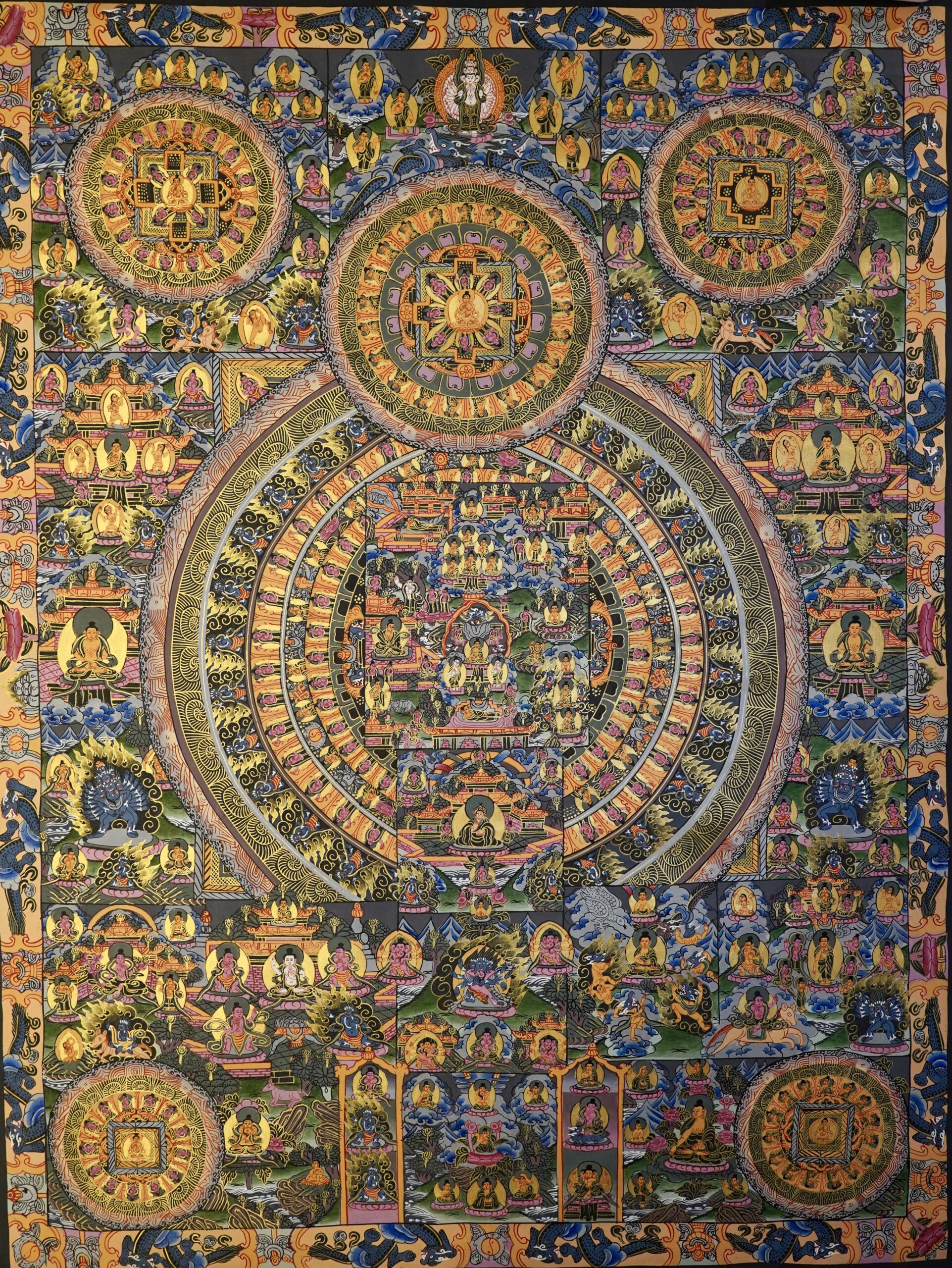
Tangka, a sacred art form rooted in the spiritual traditions of Tibetan Buddhism, is far more than a painting—it is a living embodiment of devotion, discipline, and transcendence. Originating over a thousand years ago in the Himalayan regions, Tangka was created as a portable medium for teaching and meditation, allowing practitioners to carry the essence of the Dharma across vast landscapes and through generations.
Each Tangka is meticulously composed according to ancient guidelines, where proportion, color, and symbolism are governed by sacred geometry and lineage teachings. The figures depicted—whether enlightened Buddhas, compassionate Bodhisattvas, or intricate mandalas—are not imagined freely, but revealed through a deeply respected visual language passed down from master to apprentice. The creation process itself is a meditative journey; every brushstroke is intentional, every detail an offering.
Traditionally painted on cotton or silk and often adorned with natural mineral pigments and gold, a Tangka radiates both visual brilliance and spiritual presence. It is believed that these works are imbued with energy through ritual practices, transforming them into powerful objects of contemplation. To gaze upon a Tangka is to enter a dialogue between the inner and outer worlds—a quiet invitation toward clarity, compassion, and awakening.